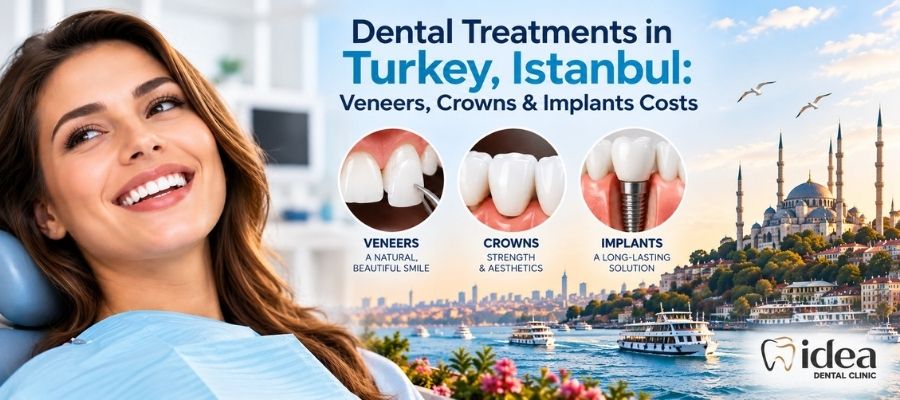



If you’re researching dental treatment in Turkey costs, you’ve probably come across prices that vary significantly from one clinic to another. That’s partly because “dental treatment in Turkey” can mean anything from a single composite veneer to a complex full-mouth rehabilitation involving implants, crowns, bone grafting, or other procedures.
Turkey is a well-established dental tourism destination. Patients from the UK, Germany, other European countries, and the US travel to Istanbul and other Turkish cities for veneers, crowns, dental implants, and full-mouth treatment at prices that are often lower than those available in their home countries.
This guide explains dental treatment prices in Turkey, why treatment can cost less, what affects the final price, how Turkey compares with the UK, Germany and the US, what dental packages may include, and what you should check before booking treatment in Istanbul.
This treatment and pricing overview was reviewed by Spec. Dent. Can Metiner, Specialist Prosthodontist at Idea Dental Clinic. Last reviewed: September 2026.
In this guide:
- Why Is Dental Treatment More Affordable in Turkey?
- Dental Treatment Price List in Turkey
- What Affects the Cost of Dental Treatment in Turkey?
- Turkey vs UK, Germany and US Dental Costs
- How Much Can You Save on Dental Treatment in Turkey?
- What Is Included in Dental Treatment Packages?
- Full-Mouth Rehabilitation and Complex Cases
- How to Compare Dental Clinics and Quotes
- Why Choose Idea Dental Clinic for Dental Treatment in Istanbul
- Idea Dental Clinic in Third-Party Publications
- Frequently Asked Questions About Dental Treatment Costs in Turkey
- Conclusion
Why Is Dental Treatment More Affordable in Turkey?
Lower dental treatment prices in Turkey do not necessarily mean lower standards of care. Much of the price difference is structural. Operating expenses, laboratory costs, staffing costs, and other overheads can be lower than in cities such as London, Berlin, or major US metropolitan areas.
Turkey also has a highly competitive dental tourism market. Clinics treating international patients often handle a relatively high volume of restorative, cosmetic, and implant cases. This can allow established clinics to invest in technologies such as CBCT imaging, digital intraoral scanning, CAD/CAM systems, digital smile planning, and in-house laboratory workflows while maintaining competitive treatment prices.
However, a lower price should never be the only reason to choose a clinic. Dental restorations and implants may remain in your mouth for many years. The quality of diagnosis, treatment planning, materials, clinical expertise, laboratory work, and aftercare can be more important than finding the lowest headline price.
Dental Treatment Price List in Turkey
Take these as general planning ranges for dental treatment in Turkey rather than fixed Idea Dental Clinic prices. Your final treatment plan and pricing depend on a clinical examination, diagnostic imaging where appropriate, the number of teeth involved, the materials selected, and whether additional procedures are required.
| Treatment | Typical Price Range |
|---|---|
| Consultation & panoramic X-ray | Often free or minimal charge |
| 3D CBCT scan | May be charged separately; confirmed at consultation |
| Composite veneer | £110 – £220 per tooth |
| Porcelain / E-max veneer | £150 – £450 per tooth |
| Zirconium crown | £110 – £300 per tooth |
| Dental implant (fixture + abutment + crown) | £300 – £900 per implant |
| All-on-4 / full-arch implant treatment | £3,000 – £7,500 per jaw |
| Root canal treatment | £110 – £340 per tooth |
| Teeth whitening | £190 – £300 |
These prices are approximate planning ranges and may vary according to the clinic, materials used, treatment complexity, and individual clinical needs. An accurate quote can only be provided after a clinical examination and, where appropriate, diagnostic imaging.
It is also important to compare like with like. For example, the word “implant” may refer only to the implant fixture or to a complete restoration consisting of the implant fixture, abutment, and final crown. Always check exactly what a quoted price includes.
What Affects the Cost of Dental Treatment in Turkey?
Two patients asking for the same type of dental treatment may receive different quotes. The headline price alone does not show what the final treatment will cost.
Number of Teeth Being Treated
The number of veneers, crowns, implants, fillings, or other restorations required directly affects the total price. Treating one or two teeth is very different from planning a complete smile makeover or full-mouth rehabilitation.
A full smile or full-mouth treatment should therefore not be estimated simply by multiplying a generic per-tooth price.
Type and Quality of Dental Material
Composite resin, porcelain, E-max ceramic, and zirconia have different properties, indications, laboratory requirements, and costs.
When comparing treatment plans, ask what material will actually be used rather than relying on general descriptions such as “premium veneer” or “premium crown.” Where relevant, you can also ask for the manufacturer or product specification.
Implant Brand and Components
The implant brand and implant system can affect the cost of treatment.
It is equally important to establish what the implant price actually covers. One quote may refer only to the implant fixture, while another may include the fixture, abutment, temporary restoration, and final crown.
Bone Grafting and Sinus Lift Procedures
Some patients do not have sufficient bone volume for straightforward implant placement and may require bone grafting or sinus augmentation.
These additional procedures can increase both the total treatment cost and the treatment timeline. They may not be included in an advertised implant package.
Diagnostic Imaging and Digital Planning
Panoramic X-rays, CBCT scans, digital impressions, digital treatment planning, and surgical guides may be included in some treatment plans and charged separately in others.
Complex implant and full-mouth cases generally require more extensive diagnostic planning than straightforward restorative procedures.
Gum Health, Decay and Root Canal Treatment
Existing oral health problems may need to be treated before cosmetic or restorative treatment begins.
For example, active gum disease may require periodontal treatment before veneers, crowns, or implants are considered. A tooth affected by decay or infection may require root canal treatment or another procedure before the final restoration can be placed.
Complexity of the Case
Severe tooth wear, significant bone loss, bite problems, failed previous dental work, and multiple missing teeth can make treatment more complex.
For this reason, complex dental treatment cannot always be accurately priced from photographs alone. A clinical examination and appropriate diagnostic imaging are important before a final treatment plan and quote are confirmed.
Turkey vs UK, Germany and US Dental Costs
Dental treatment prices in Turkey can be considerably lower than private treatment prices in the UK, Germany, and the US. To make the comparison easier, all figures below are shown in approximate British pounds.
| Treatment | Turkey (Istanbul) | United Kingdom | Germany | United States |
|---|---|---|---|---|
| Single dental implant | £300 – £900 | Approx. £2,400 | Approx. £1,000 – £1,800 | Approx. £4,100 |
| Full-mouth / full-arch implants (per jaw) | £3,000 – £7,500 | Approx. £12,000 | Approx. £11,300 – £18,000 | Approx. £19,500 |
These are broad market estimates for comparison purposes rather than guaranteed treatment prices. Actual costs vary according to the clinic, implant system, restoration type, additional procedures, and complexity of the individual case.
Prices originally quoted in other currencies can also change when converted into pounds because of exchange-rate movements.
How Much Can You Save on Dental Treatment in Turkey?
The potential saving depends heavily on the type and extent of treatment.
For a relatively small procedure, flights, accommodation, and other travel expenses may reduce the financial advantage of travelling abroad. For treatments involving multiple veneers, crowns, implants, or full-arch rehabilitation, the absolute difference between treatment costs in Turkey and countries such as the UK, Germany, or US can be considerably larger.
When comparing Turkey vs UK dental costs or prices in other countries, the most useful question is not simply “How much does an implant cost?” but “What does the complete treatment plan include?”
Compare:
- the number of teeth or implants being treated;
- the implant brand and components;
- the crown or veneer material;
- diagnostic imaging;
- temporary restorations;
- bone grafting or other additional surgery;
- laboratory work;
- flights and accommodation;
- follow-up appointments;
- and aftercare once you return home.
A lower headline price may not result in a lower final cost if necessary procedures are added later. Comparing itemized treatment plans is therefore more useful than comparing a single advertised price.
What Is Included in Dental Treatment Packages?
“All-inclusive” does not have a universal definition in dental tourism. A package may cover some parts of treatment and travel while other services remain separate.
The safest approach is to confirm every item in writing before booking.
| Item | Possible Package Inclusion | Point to Confirm |
|---|---|---|
| Initial consultation | May be included | Ask whether an examination fee applies |
| Panoramic X-ray | May be included | Confirm whether imaging is included |
| 3D CBCT scan | May be included or separate | Ask whether the scan is required and charged separately |
| Digital scans | May be included | Confirm whether they are part of treatment planning |
| Temporary restorations | Depends on treatment | Ask whether temporary teeth or crowns are included |
| Bone grafting / sinus lift | Usually case-dependent | Confirm after CBCT and clinical assessment |
| Root canal treatment | Case-dependent | Ask whether existing infection or decay changes the quote |
| Deep periodontal cleaning | Case-dependent | Confirm whether gum treatment is required before restorative work |
| Sedation | Optional | Ask whether sedation is available and separately charged |
| Night guard | Optional | Confirm whether one is recommended after treatment |
| Airport transfers | Package-dependent | Ask whether transfer services are included |
| Accommodation assistance | Package-dependent | Confirm whether the hotel is included, discounted, or only arranged |
| Follow-up during your stay | May be included | Ask how many reviews or adjustments are included |
Rather than relying on the package name, request an itemized written treatment plan showing exactly what is included and what may require an additional payment.
Full-Mouth Rehabilitation and Complex Cases
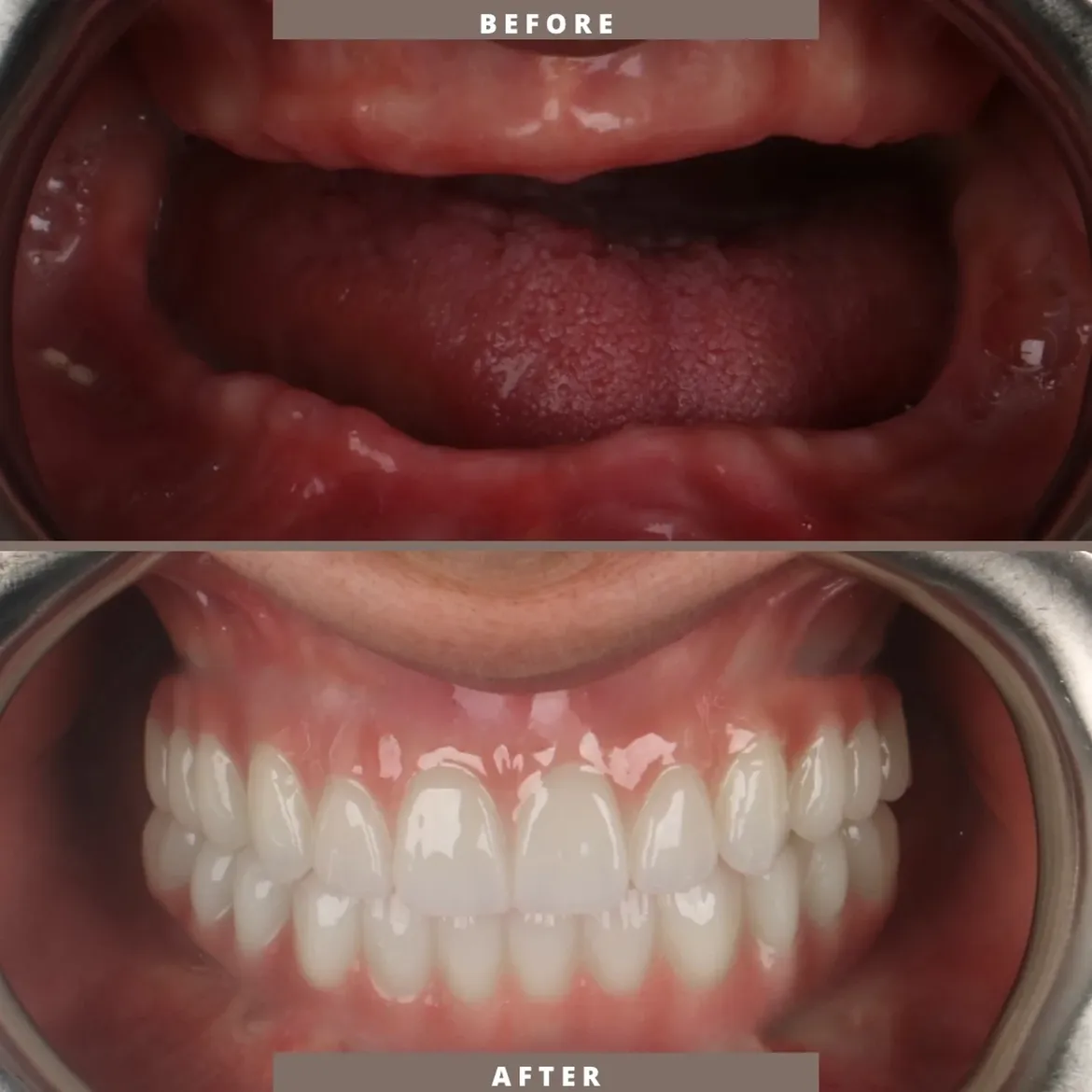
Patients dealing with extensive tooth loss, worn dentition, failing restorations, or long-standing bite problems often need more than a single procedure.
Full-mouth rehabilitation can combine crowns, implants, bridges, full-mouth dental implants, or implant-supported prostheses into one coordinated treatment plan rather than treating each tooth in isolation.
For patients with significant bone loss who are not straightforward candidates for conventional implants, options such as zygomatic implants may be assessed as part of the treatment plan.
Zygomatic implants are more involved surgical procedures and are not appropriate for every patient. A full clinical and radiographic assessment is required before determining whether they are suitable.
Why Full-Mouth Treatment Cannot Be Accurately Priced Per Tooth
Full-mouth cases are difficult to price using a simple cost-per-tooth calculation because the treatment plan depends on the condition of the entire mouth.
The dentist may need to assess:
- how many natural teeth can be preserved;
- how many teeth require extraction;
- the number and position of implants;
- available bone volume;
- whether bone grafting is required;
- gum health;
- the patient’s bite and jaw relationship;
- temporary prostheses;
- the material used for the final restorations;
- laboratory and digital workflow requirements;
- and whether treatment will be immediate or staged.
Two patients asking for “a full set of teeth” can therefore require completely different treatment plans and have very different costs.
A meaningful full-mouth quote should be based on a clinical examination and appropriate diagnostic imaging rather than a generic per-tooth price.
How to Compare Dental Clinics and Quotes
Whether you’re comparing clinics or preparing to book treatment, ask each clinic the same questions:
- Is the treatment plan itemized rather than presented as one lump-sum price?
- What exact crown or veneer material will be used?
- Is the material manufacturer or product specification identified where relevant?
- Which implant brand and model or system will be used?
- Does the implant price include the fixture, abutment, temporary restoration, and final crown?
- Will panoramic imaging or CBCT be completed before the final treatment plan?
- Is the treatment immediate or staged across more than one visit?
- Who will perform the implant surgery?
- Who will design and place the final restorations?
- Are temporary teeth or restorations included?
- Could bone grafting, root canal treatment, extractions, or gum treatment add to the cost?
- What happens if an adjustment or complication occurs after you return home?
- Is there a written aftercare or warranty policy, and what does it cover?
- How long must you stay in Istanbul and how many follow-up visits are planned?
A clinic that answers these questions clearly and in writing makes it easier to understand exactly what you’re paying for.
Why Choose Idea Dental Clinic for Dental Treatment in Istanbul
At Idea Dental Clinic, treatment planning starts with a clinical examination rather than a fixed package based only on the number of teeth a patient wants treated.
Specialist-Led Treatment Planning
Complex dental treatment may involve more than one area of dentistry. Implant placement, gum health, restorative planning, aesthetics, and bite function can all influence the final treatment plan.
At Idea Dental Clinic, treatment planning can therefore involve specialists from different dental disciplines depending on the patient’s clinical needs. Periodontal assessment may be required before implant or restorative treatment, while prosthodontic planning is important when designing crowns, veneers, implant-supported restorations, or full-mouth rehabilitation.
This multidisciplinary approach allows the condition of the gums, remaining teeth, bone, bite, and planned restorations to be considered together rather than treating each procedure in isolation.
Digital Treatment Planning
“The meticulous craftsmanship behind every smile… Discover step by step how a restoration takes shape, from digital design to the final touches.”
The clinic in Istanbul’s Eyüpsultan district uses CBCT 3D imaging, digital scanning, and an in-house digital design workflow to support diagnosis and restorative treatment planning.
Where clinically appropriate, patients can review a proposed restorative result before treatment begins.
Treatment plans are provided in writing, with information about the proposed procedures, expected timeline, and what is included or excluded before patients make decisions about travel.
Laser Technology
“Laser technology allows for controlled tissue shaping with minimal intervention, providing a comfortable and carefully performed treatment experience.”
Idea Dental Clinic also uses laser technology across several stages of treatment. Laser-assisted gum treatment can support soft-tissue management around implants, crowns, and other restorations, helping with both healing and aesthetic results. Laser technology may also be used for procedures such as teeth whitening and, where clinically indicated, to assist with disinfection during root canal treatment.
These applications are used where clinically appropriate, alongside the digital and specialist-led planning described above, rather than as a substitute for a full clinical assessment.
Screw-Retained Implant-Supported Prostheses
“Why do we prefer screw-retained systems for implant-supported prostheses? Without the use of cement, the prosthesis is mechanically secured, allowing for greater control and quick access when needed.”
Screw-retained systems are generally preferred for implant-supported prostheses because, without the use of cement, the prosthesis is mechanically secured directly to the implant. This gives the dentist greater control over fit and, when needed, quick access to the implant and prosthesis for maintenance, adjustment, or repair.
This approach can also reduce the risk of excess cement remaining around the implant, which has been associated with peri-implant inflammation. Screw-retained restorations are used where clinically appropriate as part of the implant treatment planning described above.
To discuss your treatment requirements, contact Idea Dental Clinic for an individualized assessment.
Idea Dental Clinic in Third-Party Publications
Idea Dental Clinic has also been featured in several third-party publications, providing additional context for patients researching dental treatment and implant clinics in Turkey.
In the Barchart cost-and-clinic roundup, Idea Dental Clinic is placed first in a ranked list of Turkish clinics. The article highlights the clinic’s specialist-based approach across implantology, prosthodontics, aesthetic dentistry, and full-mouth rehabilitation. It also refers to technologies used at the clinic, including CBCT 3D tomography, digital oral scanners, and in-house digital design, and discusses full-mouth rehabilitation and smile makeover cases in the context of digital treatment planning and previewing proposed restorative outcomes.
Separately, The European Business Review’s list of the best implant clinics in Turkey includes Idea Dental Clinic among its featured implant clinics. The article describes an approach in which implant treatment is considered as part of a broader restorative plan rather than as an isolated procedure. It also notes the clinic’s English-language information about advanced procedures such as full-mouth implants and zygomatic implants, which may be considered in selected patients with significant bone loss. The publication also refers to the amount of implant-related educational content available for international patients.
A separate European Business Review profile of Idea Dental Clinic provides additional background on the clinic’s development, specialist-led structure, and approach to digital dentistry. According to the profile, Idea Dental Clinic was founded in 2021 by three specialist dentists with backgrounds in periodontology and prosthodontics.
Rather than focusing only on individual procedures, the article describes a multidisciplinary model in which periodontal health, restorative requirements, aesthetics, implant planning, and bite-related considerations can be evaluated as part of a coordinated treatment plan.
The profile also describes the clinic’s facility in Istanbul’s Eyüpsultan district, including its dental laboratory and digital CAD/CAM workflows. It highlights the use of digital technologies in restorative and implant treatment planning and notes that the clinic provides services across implant surgery, aesthetic dentistry, periodontics, orthodontics, paediatric dentistry, and endodontics.
For international patients, the article also points to the clinic’s multilingual website and its process of providing treatment information before travel. According to the publication, patients typically receive a written treatment plan and an expected treatment timeline before arranging their visit to Istanbul.
-
Dr. Gamze Kavuncu is a periodontology specialist. She has contributed to published research on regenerative periodontal therapy and holds memberships in the Turkish Dental Association, the Turkish Periodontology Association, and the European Federation of Periodontology.
-
Dr. Can Metiner, a prosthodontist, spent time observing the German dental system at Ludwig Maximilian University in Munich and has published in international journals. He speaks English and German and focuses on conservative, digitally supported restorative treatment.
-
Dr. Ali Can Yeni is a prosthodontist with doctoral training who has a clinical focus on aesthetic dentistry and TMJ therapy.
-
Spec. Dent. Göze Arukaslan is an endodontics specialist with a clinical focus on microscopic root canal treatment.
-
Dent. Sefa Ercan Önal is a dentist focused on aesthetic and prosthetic dentistry.
The profile also describes the clinic’s facility in Istanbul’s Eyüpsultan district, its dental laboratory, digital CAD/CAM workflows, and a treatment range that includes implant surgery, aesthetic dentistry, periodontics, orthodontics, paediatric dentistry, and endodontics. It also notes the clinic’s multilingual website and states that international patients typically receive a written treatment plan and expected timeline before arranging travel.
Third-party coverage does not guarantee a particular clinical outcome, but it can provide additional background alongside the clinic’s own information when patients are comparing treatment providers.
What to Do in Istanbul Besides Your Dental Treatment?
Frequently Asked Questions About Dental Treatment Costs in Turkey
How much do veneers cost in Turkey?
Pricing depends on the material used — composite, porcelain, or E-max — as well as the number of teeth involved and whether preliminary treatment is required.
As a general planning range, composite veneers cost approximately £110–£220 per tooth, while porcelain or E-max veneers may cost around £150–£450 per tooth.
The final price depends on the material, number of teeth, tooth preparation, laboratory work, and any additional treatment required. Learn more about porcelain veneers.
How much is a dental implant in Turkey?
A complete single-tooth dental implant restoration may cost approximately £300–£900 depending on the implant system, abutment, crown material, and complexity of the case.
Always confirm whether the quoted implant price includes the implant fixture, abutment, and final crown.
Full-arch implant treatments may cost approximately £3,000–£7,500 per jaw.
How much does a full set of teeth cost in Turkey?
There is no single price for a “full set of teeth” because the term may refer to crowns on natural teeth, an implant-supported bridge, All-on-4, All-on-6, or another form of full-mouth rehabilitation.
As a broad planning range, full-arch implant treatment may cost approximately £3,000–£7,500 per jaw.
An accurate full-mouth treatment price requires a clinical examination and appropriate diagnostic imaging.
Why is dental treatment more affordable in Turkey?
Dental treatment can cost less in Turkey mainly because operating expenses, laboratory costs, staffing costs, and other overheads can be lower than in countries such as the UK, Germany, and the US.
Turkey also has a competitive, relatively high-volume dental tourism market.
Lower cost does not by itself indicate the quality of treatment. Diagnosis, clinician qualifications, materials, infection control, laboratory work, and aftercare should also be considered.
Is it more affordable to get dental implants in Turkey than in the UK, Germany, or the US?
Broad market comparisons generally show lower implant prices in Turkey, particularly for treatments involving multiple implants or full-arch rehabilitation.
Based on the planning ranges used in this guide, a single implant in Turkey may cost approximately £300–£900, compared with around £2,400 in the UK, approximately £1,000–£1,800 in Germany, and approximately £4,100 in the US.
For full-mouth or full-arch implant treatment per jaw, the approximate comparison is £3,000–£7,500 in Turkey, around £12,000 in the UK, approximately £11,300–£18,000 in Germany, and approximately £19,500 in the US.
These figures are general market estimates rather than guaranteed prices. Compare the complete treatment plan, including the implant brand, components, imaging, grafting, temporary and final restorations, travel, and aftercare.
What is included in an all-inclusive dental package in Turkey?
Package contents vary between clinics.
Consultation, digital scans, temporary restorations, transfers, or accommodation assistance may be included in some packages. CBCT scans, bone grafting, root canal treatment, gum treatment, sedation, or night guards may be charged separately.
Ask for a written, itemized list of inclusions and exclusions before booking.
Are crowns cheaper than veneers in Turkey?
It depends on the material and clinical indication.
As general planning ranges, zirconium crowns may cost approximately £110–£300 per tooth, while porcelain or E-max veneers may cost approximately £150–£450 per tooth.
However, crowns and veneers have different clinical indications. The decision between them should be based on the condition of the tooth rather than price alone.
How long do I need to stay in Istanbul for dental treatment?
Many veneer and crown cases may be completed during a stay of approximately 5–8 days, depending on the number of teeth, laboratory workflow, treatment complexity, and required adjustments.
Implant treatment is often staged across separate visits because a healing and osseointegration period may be required before the final restoration is placed.
Can dental implants be completed in a single visit?
In selected cases, implant placement and a temporary restoration may be possible during one visit.
However, the final implant restoration is often placed after an appropriate healing period. Suitability for immediate treatment depends on factors such as available bone, implant stability, implant position, bite, and the overall treatment plan.
Is dental treatment in Turkey safe?
Dental treatment can be carried out safely when performed by appropriately qualified clinicians in properly licensed clinical settings.
When comparing clinics, look beyond price and ask about diagnostic imaging, sterilization and infection-control procedures, implant and material traceability, informed consent, clinician qualifications, treatment records, follow-up arrangements, and aftercare.
No clinic can eliminate every clinical risk, so patients should also understand what will happen if a complication or adjustment is required after returning home.
What should a proper dental treatment quote include?
A clear dental treatment quote should include the number of teeth and procedures being planned, the exact restorative materials, the implant brand or system where relevant, the implant fixture, abutment and crown where applicable, diagnostic imaging, temporary restorations, additional surgery if known, expected visits, treatment timeline, and any exclusions.
An itemized quote makes it easier to compare different treatment plans accurately.
What hidden dental costs should I watch for?
Potential additional costs can include CBCT scans, extractions, deep periodontal cleaning, root canal treatment, bone grafting, sinus lift procedures, sedation, temporary teeth, night guards, hotel or transfer costs, and additional follow-up or adjustment appointments.
Ask for an itemized treatment plan before booking so that possible additional costs are identified as clearly as possible.
Conclusion
Turkey remains a popular destination for international patients considering veneers, crowns, dental implants, and full-mouth rehabilitation, with treatment prices that can be considerably lower than those found in the UK, Germany, or the US.
However, the cheapest quote should not automatically be considered the best treatment option. The more useful comparison is between complete treatment plans: diagnosis, clinician qualifications, implant or restorative materials, diagnostic imaging, laboratory work, additional procedures, treatment timeline, and aftercare should all be considered alongside price.
Idea Dental Clinic has also been featured in multiple third-party publications that provide additional information about its specialist team, digital workflow, and approach to restorative and implant dentistry.
If you’re researching veneers, dental implants, or full-mouth dental treatment in Istanbul, contact Idea Dental Clinic to request an individualized assessment and treatment quote.